Engineered oak vs solid wood vs LVT — which floor should you actually choose?
A plain-English comparison of engineered oak, solid wood, LVT and laminate for London homes. What lasts, what doesn't, and what you'll regret in three years.
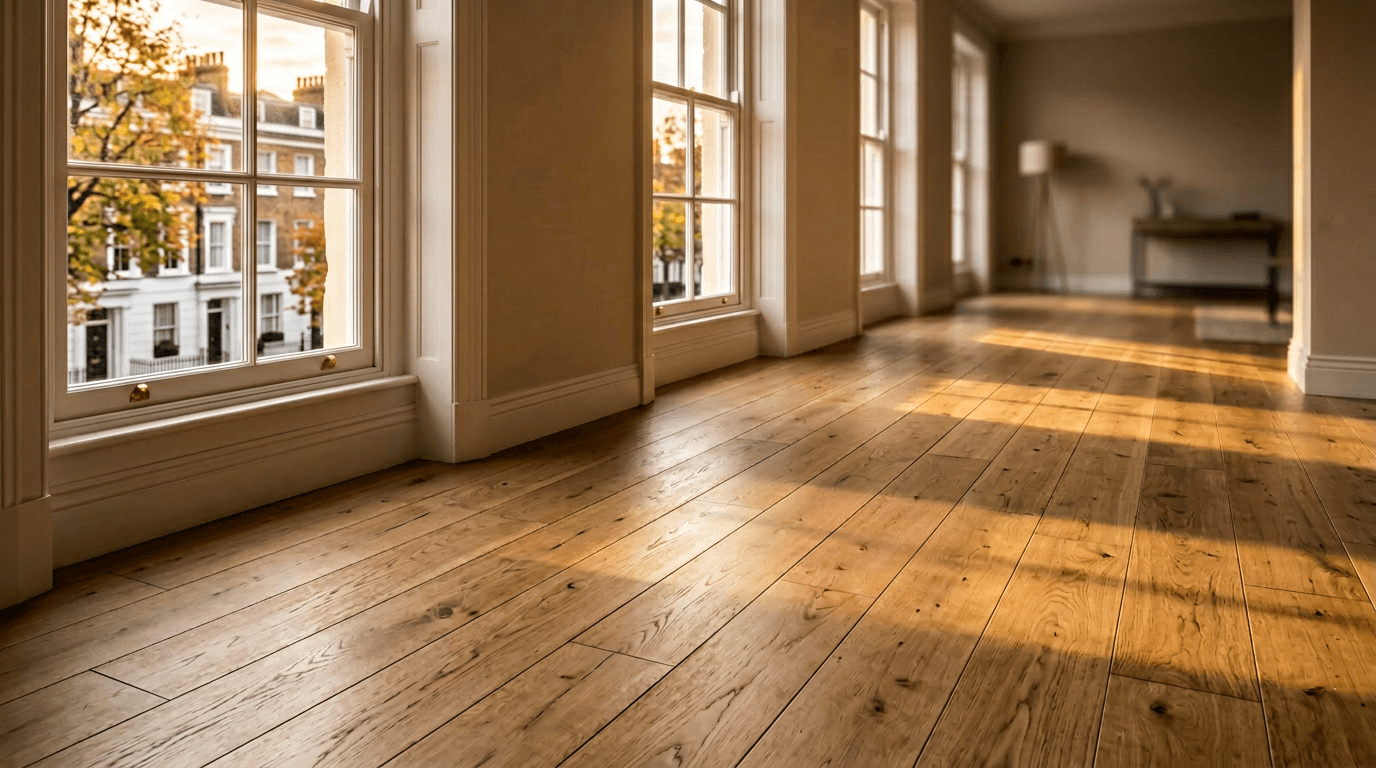
Most London floors come down to four real options: engineered oak, solid wood, luxury vinyl tile (LVT), and laminate. Each has a place — and each has a scenario where it's the wrong choice. Here's the honest guide.
Engineered oak — the default for most London homes
What it is: a 3–6mm real oak wear layer bonded to a plywood or HDF core. The top looks and behaves like solid wood; the core is dimensionally stable.
Pros:
- Handles underfloor heating (solid wood usually can't)
- More stable than solid in humidity swings
- Can be sanded and refinished 2–4 times depending on wear layer
- Fits on plywood, screed, or joists — more flexible install options
Cons:
- Cheap engineered (under 3mm wear layer) can only be refinished once or not at all
- Quality varies wildly — there's £30/m² engineered and there's £180/m² engineered, and it matters
When it's right: most London homes, most rooms except bathrooms and utility rooms. Use 15mm minimum thickness and 4mm minimum wear layer to keep options open long-term.
Price guide: £45–£120/m² supply only, plus £25–£45/m² fit.
Solid wood — character, with caveats
What it is: a single plank of hardwood, usually oak, 18–22mm thick.
Pros:
- Best looking option, full stop. The patina it develops is unmatched.
- Can be refinished 5+ times. Lasts lifetimes.
- Adds value to period properties — buyers notice.
Cons:
- Doesn't play well with underfloor heating (most manufacturers void warranty)
- Expands and contracts visibly with humidity — gaps in winter, cupping in summer if wrong subfloor
- Needs to acclimatise on site for 7–14 days before fitting
- Expensive, slow to install
When it's right: period properties, where character matters more than practicality. Upstairs rooms where UFH isn't planned. Over an existing solid timber joist structure.
Price guide: £75–£200/m² supply only, plus £35–£60/m² fit.
LVT — don't dismiss it
What it is: multi-layer plastic with a photographic wood/stone image and a wear layer, usually 4–6mm click or glue-down.
Pros:
- Genuinely waterproof (unlike any wood)
- Handles underfloor heating very well
- Kinder to feet on concrete slabs (warmer)
- Quick install, can often go over existing subfloors
- Good LVT is indistinguishable from engineered wood in photos
Cons:
- Closer inspection always reveals the repeat pattern
- Dents under heavy furniture (chair legs, sofa casters)
- Can't be refinished — worn out = replaced
- Environmental footprint (PVC) is worse than wood
When it's right: bathrooms, utility rooms, kitchens where water is a risk, basement flats, rental properties where resilience beats romance. Also legitimately good in family homes with young kids and dogs.
Price guide: £35–£85/m² supply only, plus £20–£35/m² fit.
Laminate — cheapest is false economy
What it is: HDF core with a photographic surface laminate. The fast-food of flooring.
Pros:
- Cheapest upfront
- Easy to click-install yourself
Cons:
- Expands from any water spill
- Can't be refinished
- Sounds hollow and plasticky underfoot
- Obvious as fake on close inspection
- Doesn't add any value to the property
When it's right: short-term rental lets where you need to budget-replace every 3–5 years. Rarely a good call otherwise.
Price guide: £15–£35/m² supply only.
The quick decision tree
- Period property, no UFH, happy to maintain? → Solid wood
- New floor, UFH, want real wood look? → Engineered oak (4mm+ wear layer)
- Bathroom, utility, or kitchen floor-to-ceiling waterproof? → LVT
- Buy-to-let, budget everything? → Laminate (and accept you'll replace it)
- Basement flat, cold concrete slab, want warmth and durability? → LVT over insulation board, UFH if budget allows
What matters more than the material
The subfloor. A £150/m² floor installed over an uneven, damp, or unsuitable subfloor will fail in two years. A £45/m² floor installed over a properly prepared subfloor lasts decades. Budget for floor preparation — latex self-levelling, moisture barrier, proper acoustic underlay — before you spend on the visible layer.
Need a London floor fitted properly? Book a consultation — we'll assess the subfloor, talk through what actually suits your home, and fit it so it lasts.