Renovating a Victorian house in London — the full guide
Lead pipes, lath-and-plaster, bomb damage, rising damp, wet rot, dead electrics. A survival guide to renovating a Victorian or Edwardian London property in 2026.
Most London housing stock was built between 1850 and 1910. That means most London renovations are Victorian or Edwardian renovations — and every one of them hides a particular set of problems you need to find before you commit to a budget.
The big seven — what to check before you start
1. Lead pipes
Roughly a third of pre-1970 London houses still have lead incoming mains or lead stubs on internal pipework. If the water main coming in through the front wall is dull grey, scratches silver, and is soft enough to dent with a fingernail — it's lead. Thames Water will replace the part on their side for free. The part on your side is yours (£600–£1,500 to swap for copper or MDPE).
2. Galvanised / cast iron pipework
Internal plumbing from before the 1960s is often galvanised steel or cast iron. It corrodes from the inside, builds pinholes, and gives you brown water. If you see any of those pipes, replace all of it during the refit. Patching = back in six months.
3. Lath-and-plaster ceilings
Most ceilings in houses built before about 1930 are lath-and-plaster: horsehair-reinforced lime plaster on thin wood laths. If it's in good nick, keep it — it has better fire and acoustic properties than modern plasterboard. If it's bowed, saggy, or drum-hollow when you tap it, the keys between the laths have broken. It will come down in chunks. Budget £70–£120/m² for full replacement (strip, board, skim, cornicing re-formed).
4. Rising and penetrating damp
Victorian houses have slate or bituminous damp-proof courses that have usually failed. Signs: tide-mark staining up to ~1m on ground-floor walls, salty efflorescence, peeling paint on internal skirtings. Also check external render — if it bridges the DPC (runs below the horizontal line of slate visible between bricks), damp gets in laterally. Real fix: strip internal plaster back to brick, apply a lime plaster or a proper cementitious tanking system. Quick-and-dirty fix (injection DPC + gypsum plaster): works for mortgage surveys, often fails properly within 5–10 years.
5. Wet and dry rot
Check every timber you can see. Wet rot (Coniophora puteana) is black/brown, crumbly, and localised around leaks. Dry rot (Serpula lacrymans) is catastrophic — fluffy white mycelium, red spore dust, cube-shaped cracking. Dry rot eats timber through plaster and brickwork, can spread metres from a small leak, and needs specialist treatment (£3,000–£15,000+ depending on extent).
6. Electrics
If you see old rubber-insulated cables (grey, hard, cracks at bends), round-pin plug sockets, or a wooden fuse board with ceramic fuses — the whole house needs rewiring. Budget £5,500–£9,000 for a 3-bed Victorian terrace, more if you want fancy controls. Expect a lot of chasing out walls; make the rewire early in the programme, not after the plaster.
7. Roofs and gutters
Original roofs are often Welsh slate on timber battens. Slate itself lasts 100–150 years. The iron nails holding it on (called "nail sickness") don't — they corrode after 80–120 years, and the slates slip progressively. If the roof has never been stripped and re-nailed, budget for it: £8,000–£18,000 for a typical terrace roof, more for a mansard profile.
Order of operations
The single biggest mistake on Victorian renovations: decorating, then fixing damp, then decorating again. Do it in this order:
- Structural + damp survey.
- Strip out carpets, kitchens, bathrooms, failed plaster.
- Roof, chimneys, gutters, lead flashings.
- Damp fixes — external render, DPC, tanking, drainage, ventilation.
- Rewire, replumb, new heating.
- New kitchens, bathrooms.
- Plastering, decorating.
- Floors, joinery, final fit-off.
Do it in that order and you fix things once. Do it out of order and you tear up your own work.
Listed buildings and conservation areas
Huge portions of inner London are listed or in conservation areas. The rules matter:
- Listed (grade II, II*, or I) — any change to the character of the building needs Listed Building Consent. Changing windows, doors, internal walls, even modern paint colours can all require consent. Penalties for unauthorised work are criminal.
- Conservation area — the exterior is controlled. Windows, doors, render, roof tiles, and often render colour are subject to council approval. Interior generally free (unless also listed).
Don't buy sash windows in uPVC, don't skim over original cornicing, don't paint the front door a non-heritage colour without checking. Councils do prosecute.
Things to preserve, not strip
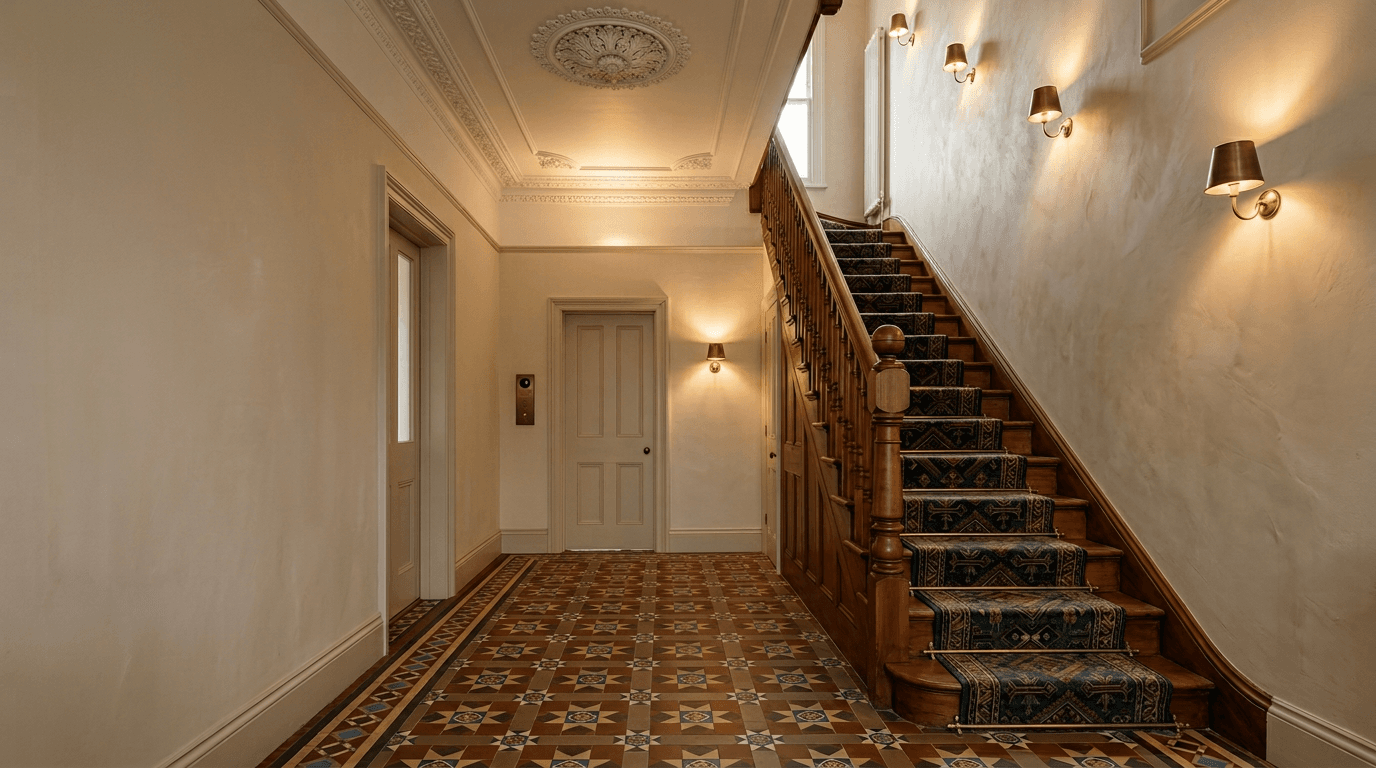
- Original cornicing, ceiling roses, picture rails, skirtings, architraves. These are what make the house worth something.
- Internal doors (4-panel or 6-panel). Strip back the paint properly, rehang on proper butt hinges.
- Floorboards. Pine or pitch pine, usually. Sand, fill, re-finish — £35–£60/m², worth every penny.
- Fireplaces and hearths. Even unused, they anchor the room. Don't board them over.
- Sash windows. Restored properly, they outperform most uPVC on both character and lifespan. Budget £700–£1,500 per window for sash restoration with draught-proofing.
Renovating a Victorian or Edwardian London home? Book a consultation — we'll survey, identify the hidden work, and plan a proper programme before a single tool comes out.